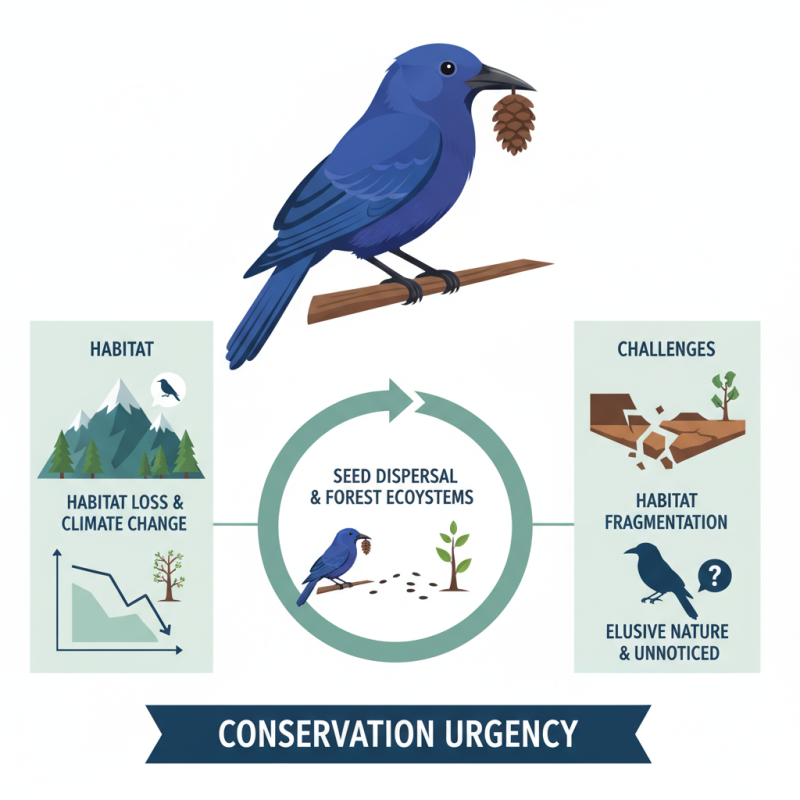
The Blue Nutcrackeris such a fascinating bird that really catches the eye of bird lovers all around the world. I mean, according to the North American Bird Conservation Initiative, understanding how it behaves and where it lives can actually help us do a better job protecting it. Most of the time, you’ll find the Blue Nutcracker hanging out in mountainous areas, but they’re really feeling the heat—thanks to habitat destruction and climate change, their numbers are declining.
Lately, studies published in the Journal of Avian Biology have shown just how important this bird is in spreading seeds. It’s pretty amazing—by doing so, it helps keep various tree species alive and supports healthy forests. That said, researchers are pretty worried because fragmented habitats make it tricky for these birds to survive long-term. Honestly, safeguarding their homes should be a top priority.
On top of that, even though the Blue Nutcracker has this striking look—trust me, pictures don’t do it justice—many folks don’t really notice it. Its elusive nature makes it easy to overlook. It’s pretty impressive how adaptable it is, but that also makes some of us wonder about its future. Thinking about all this really helps us appreciate this unique bird a bit more. In a world that’s changing so fast, the Blue Nutcracker’s future is definitely something we shouldn’t ignore—it’s an issue that needs our attention, for sure.
Characteristics and Appearance of Blue Nutcracker
The Blue Nutcracker, a fascinating bird, boasts a vivid appearance. Its plumage is a striking blue, accented by black and white markings. This coloration helps it blend into its forest habitat. The bird's eyes are large and expressive, contributing to its charming appeal. However, the contrast between its bright colors and the muted tones of the forest can be perplexing.
In terms of size, the Blue Nutcracker is medium, usually around 30 centimeters long. Its wingspan is impressive, allowing it to glide gracefully through trees. The bird's strong beak is designed for cracking nuts and seeds. This showcases its adaptability in finding food. Despite its beauty, it faces challenges, such as habitat loss. Its population trends highlight the need for conservation efforts.
Social behaviors of the Blue Nutcracker are intriguing. These birds can be quite vocal, communicating with a range of calls. They often forage in groups, which adds to their dynamic nature. Yet, this social structure can sometimes lead to competition for resources. Observing their interactions reveals both cooperation and conflict. The complexities of their life highlight the delicate balance in nature.
Top 10 Facts About Blue Nutcracker You Should Know
| Characteristic | Description |
| Scientific Name | Nucifraga caryocatactes |
| Common Name | Blue Nutcracker |
| Habitat | Coniferous forests in mountainous regions |
| Diet | Seeds, nuts, and berries |
| Appearance | Distinctive blue and gray plumage with a long tail |
| Size | Approximately 30-34 cm in length |
| Lifespan | Around 10-15 years in the wild |
| Nesting | Builds nests in trees, usually in conifers |
| Behavior | Known for their intelligence and complex social behavior |
| Conservation Status | Not currently considered endangered |
Habitat and Distribution of Blue Nutcracker in the Wild
The Blue Nutcracker, known for its striking colors, thrives in diverse habitats. This bird prefers mountainous regions and conifer forests. You can find it in the Alps and parts of Siberia. Its adaptability to varying altitudes is intriguing. However, these habitats are becoming fragmented. This makes the Blue Nutcracker’s future uncertain.
In the wild, the Blue And White Nutcracker mostly feeds on seeds and nuts. Pine nuts are a favorite. They play a crucial role in forest ecology by dispersing seeds. You might find them hopping from branch to branch, a lively sight. However, human impact is significant. Deforestation and climate change threaten their food supply and nesting sites.
Migration patterns are not well understood. Some populations might travel for food, but many stay put year-round. This behavior reflects their adaptability but poses risks. Disturbances in their habitat can disrupt traditional routes and feeding habits. Reflecting on these challenges is essential for conservation efforts.
Diet and Feeding Habits of the Blue Nutcracker
The Blue Nutcracker is a fascinating bird known for its striking appearance and social behavior. When it comes to diet and feeding habits, it primarily thrives on a mix of seeds, nuts, and berries. This bird has a unique ability to locate hidden food caches. It uses its sharp memory to remember where it has stored various food items. This skill helps them survive harsh winters when food is scarce.
In addition to naturally occurring food, the Blue Nutcracker is known to forage in human-populated areas. They often scavenge from picnic spots or discarded waste. This adjustment to human habits can be both beneficial and problematic. It may lead to reliance on human food sources, which are not always healthy. Observing them engage in this behavior can be entertaining, yet it raises questions about their adaptability.
The Blue Nutcracker plays a crucial role in its ecosystem. By dispersing seeds, they help promote forest growth. However, their feeding habits can disrupt local wildlife patterns. It is essential to reflect on how human activities influence such wildlife behaviors. Understanding their dietary needs could lead to better conservation efforts.
Breeding and Reproductive Behavior of Blue Nutcracker
Breeding and reproduction in blue nutcracker is a fascinating process. These birds are known for their distinct blue feathers and striking appearance. During mating season, males perform elaborate displays. They puff up their feathers and sing melodious calls to attract females. This courtship is essential for their bonding.
Nesting occurs in remote, high-altitude locations. Females seek out secluded spots to build their nests. They typically lay three to five eggs. The eggs are quite vulnerable, often subject to predation. Parents take turns incubating them and foraging for food. Young nutcrackers rely heavily on their parents for survival in the early stages.
Their care extends beyond feeding. They teach their young to crack open seeds and find food. These birds struggle with the delicate balance of nurturing and protecting their offspring. Failures in raising chicks can happen due to environmental stressors. Understanding these complex behaviors in A Nutcracker reveals how nature adapts to challenges.
Adaptations for Survival in Harsh Environments
The blue nutcracker is fascinating. It thrives in harsh environments, showcasing remarkable adaptations. Its feathers are dense and insulated, helping it endure frigid temperatures. This bird often forages on hard seeds, using its strong, pointed bill. This is a crucial survival skill.
In wild landscapes, the blue nutcracker's behavior stands out. It can remember the locations of thousands of seeds. This memory is not just impressive; it's vital. When food is scarce, these hidden stores become essential for survival. There is beauty in this strategy, but it also raises questions about reliance on memory.
The blue nutcracker, like the Red Nutcracker, has its challenges. Both species face changing habitats and food shortages. They adapt, yet the struggle continues. Nature's resilience is clear, but so are the vulnerabilities. Each season brings new tests, and reflection on survival is important.
Role of Blue Nutcracker in Ecosystem and Seed Dispersal
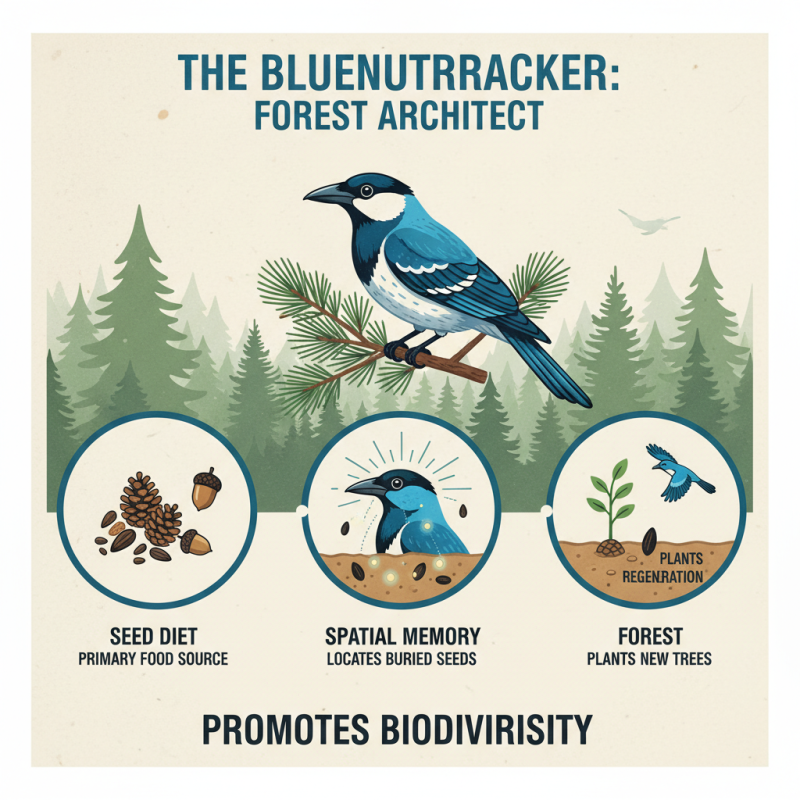
The Blue Nutcracker is a vital player in its ecosystem. It primarily feeds on seeds, especially those of coniferous trees. Research shows that the Blue Nutcracker has a highly developed spatial memory. It can locate thousands of seeds buried in the ground, a skill that plays a key role in forest regeneration. This bird helps ensure the success of various plant species, promoting biodiversity.
When Blue Nutcracker consumes seeds, it moves them to different locations. This process aids in seed dispersal, which is crucial for plant growth. A report from the Global Biodiversity Outlook indicates that animals like the Blue Nutcracker contribute to about 30% of all seed dispersal in forest ecosystems. The Nutcracker Red thrives in areas where it can efficiently scatter seeds, helping trees like pines and firs to reproduce.
However, the relationship between the Blue Nutcracker and its environment is complex. Habitat loss due to human activities poses a threat. Deforestation disrupts the Nutcracker’s food supply. This can lead to reduced seed dispersal. When its population declines, it can create a ripple effect in the ecosystem. The intricate balance that the Blue Nutcracker maintains is sometimes overlooked but is crucial for sustaining healthy forests.
Conservation Status and Threats Facing Blue Nutcracker Species
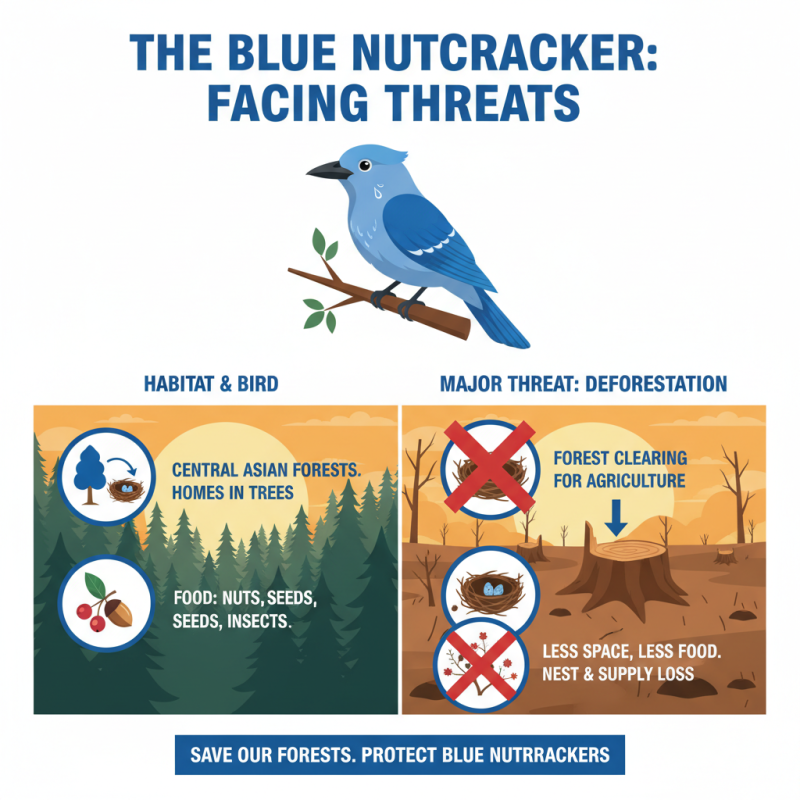
The Blue Nutcracker, a striking bird, faces numerous threats in its natural habitat. This species is primarily found in the forests of Central Asia. Deforestation is a major concern. As forests are cleared for agriculture, their living space shrinks. The loss of trees affects not only their nests but also their food sources.
Another significant threat is climate change. Shifts in weather patterns disrupt the food supply. During dry seasons, food becomes scarce, making survival more challenging. Poaching and illegal trapping add to their plight. Many fail to realize the impact of these actions. Conservation efforts are essential to protect the Blue Nutcracker.
Habitat protection is crucial for their survival. Educating local communities about the importance of this species can help. Initiatives must focus on sustainable practices. More research is needed to understand their needs better. Without immediate action, future generations may never see the beauty of the Blue Nutcracker.
Conclusion
The Blue Nutcracker is a fascinating bird species known for its striking appearance and unique characteristics. Found predominantly in mountainous regions, this bird plays a crucial role in its ecosystem, particularly in seed dispersal, which aids in the regeneration of forests. Its diet primarily consists of seeds, nuts, and berries, and it has adapted to thrive in harsh environments, showcasing impressive survival strategies.
Breeding and reproductive behaviors of the Blue Nutcracker are particularly interesting; they often form monogamous pairs during the breeding season. However, like many species, they face conservation challenges due to habitat loss and environmental changes. Understanding the various aspects of the Blue Nutcracker's life—from its feeding habits to its role in the ecosystem—underscores the importance of preserving this remarkable bird and its habitat.